Did you know that all tequila is made from agave? Find out exactly how tequila is produced and how best to enjoy it here – we'll shed some light on the subject.
The production of Tequila
We probably don't need to explain what tequila is in great detail: keywords such as lemon and salt, Margarita and Tequila Sunrise should be enough to give you a synesthetic impression of the popular Mexican spirit for your eyes, mouth and nose. Less well known, however, is what tequila actually consists of, i.e. how and from what it is produced. The agave is central to this. But what exactly are agaves?
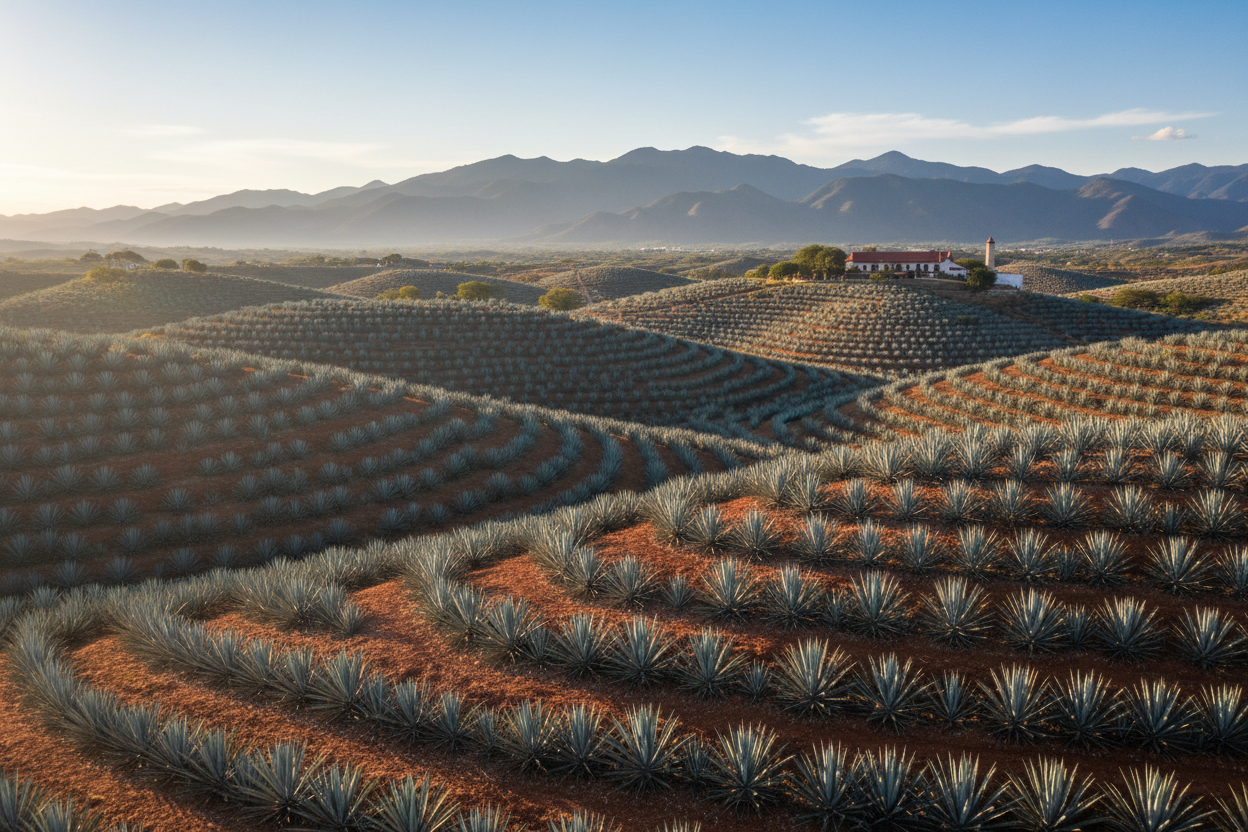
Agaves, which are mainly found in Central America, do not belong – as is often mistakenly assumed – to the cacti, but to the asparagus family. However, they are a particularly relaxed asparagus plant, as the agave only flowers once in its life, and the plant can take several decades to develop an inflorescence. It also takes nine years for the core, called "Mezcal" ("House of the Moon") in the indigenous Nahuatl language, to be harvested, which is used as a raw material for tequila production.
How are agaves turned into tequila?
The agave subspecies used for tequila production is the aptly named Agave tequiliana, which grows in the Mexican states of Sonora, Sinaloa, Jalisco, Michoacán, and Oaxaca. This plant, often simply called blue agave, is, besides water, the only ingredient in tequila. An exception is the Tequila Mixto, considered inferior, in which a maximum of 49% sugar from other raw materials such as corn may be used.
However, Tequila Mixto is not of further interest here, as we will focus only on the production of 100% agave tequila in six clear steps:
- The agave hearts (Spanish: "Piñas") are cooked for 24–36 hours at 60–85 °C, which removes bitter sap.
- After 48 hours of cooling, the agave hearts are crushed and pressed.
- The resulting highly sugary extract is enriched with water. This mixture is called "Pulque".
- The pulque is fermented for 96 hours in large vats with natural yeast. For the extremely rare "true" tequilas, the bacterium Zymomonas mobilis is used instead of yeast.
- The resulting must with approx. 8% vol. is distilled twice, increasing the alcohol content to up to 55% vol.
- After the final dilution (thinning with water), the tequilas are then bottled at 35–50% alcohol by volume, either for aging in oak barrels or directly ready for sale.
What different types of agave tequila are there?
The differences in bottling just mentioned lead to different products, but other distinguishing features also characterize the individual tequila types available. Let's take a look at the most important ones.
Tequila Silver
White tequila, also called Tequila Silver or Tequila Blanco, is the most common tequila variant and is defined by its crystal-clear color and bottling immediately after distillation. Most of us have probably already encountered Sierra Tequila Silver 38% with its characteristic red sombrero (which, by the way, can be used as a lemon squeezer). However, the best-selling tequila is José Cuervo Especial Silver Tequila 38%, which perfectly represents the taste of an authentic Tequila Silver.
Tequila Gold
Tequila Gold – also Tequila Oro – is usually a blend of Tequila Silver with an aged Tequila Reposado (or occasionally a longer-aged Tequila Añejo). Often, however, it is also a Tequila Blanco colored golden with caramel coloring. When buying, it's worth checking the label. A successful variant of Tequila Gold is the Camino Real Gold Tequila 40%, which comes directly from the city of Tequila.
Tequila Reposado
Now let's move on to the agave tequilas aged in oak barrels. The light golden Tequila Reposado is aged for at least two to a maximum of 12 months, during which time the oak wood influences its color and taste. A prime example of a Tequila Reposado, which rounds off the wild mineral-fruity taste of a Tequila Silver with mild woody aromas, is Espolón Tequila Reposado 100% puro Agave 40%.

Añejo Tequila
Añejo Tequila matures for one to three years in barrels with a maximum volume of 600 liters. The golden hue darkens with longer aging, while the aromas become milder and more complex ‒ for example, notes of orange peel, toffee and vanilla can be tasted in the popular 1800 Tequila Reserva AÑEJO 100% Agave 38%.
Tequila Extra Añejo
True tequila connoisseurs will get their money's worth with Tequila Extra Añejo aged for at least three years. The aromas of this ultra-aged tequila are as diverse and magnificent as its country of origin. If you want to travel taste-wise to the land of eternal sunshine, the Sierra Tequila Milenario Extra Añejo 100% de Agave is an excellent choice.
Mezcal
Mezcal is not actually a type of tequila; rather, tequila is a type of mezcal. Unlike tequila, mezcal can be made from the pulp of different agave species, which is why, in addition to the aging (or lack thereof), the specific composition of the agave species used determines the aromas and taste of the final product. Hacienda de Chihuahua Sotol Anejo 38% is considered an excellent mezcal with a mild-smoky, fresh-fruity agave taste.
Tequila with a worm
The legendary tequila with a worm is also not a "true" tequila type, as Mexican law prohibits them from containing foreign substances. Since an infestation of agave leaves with caterpillars occurred in the 1950s, which gave a clever Mexican art student a sustainable marketing idea, mezcal bottles often contain the worm. Whether it's just a promotional gimmick or a refined flavor nuance, it's best to find out for yourself, for example, with the Lajita Mezcal Reposado with Agave Worm 40%. In any case, it's sure to spark conversation when tasting.
The differences between Tequila Gold and Tequila Silver
Tequila Gold is (as one might guess) golden, while Tequila Silver shimmers silver. However, if we don't limit ourselves to the appearance, the differences are of course more complex, which is why we want to compare both varieties in more detail below. The main distinguishing features are:
- Tequila Silver does not age but is bottled directly after distillation. Tequila Gold, on the other hand, is usually a blend of Tequila Silver and aged tequilas.
- However, Tequila Gold can also be Tequila Silver with additives such as caramel coloring, oak extracts, glycerin, and sugar syrup. Authentic Tequila Silver, in contrast, is always made from 100% agave.
- In Germany (but not in Mexico!), Tequila Gold is often drunk as a shot with orange and cinnamon, while Tequila Silver is usually accompanied by lemon and salt.

How to drink Agave Tequila?
With the last point, we have finally elegantly reached the goal of this article – drinking tequila. Once you have chosen a tequila, you can opt for one of the three most popular ways of tasting tequila. Here's a brief overview of how to proceed in each case:
Drinking Tequila neat
If you want to drink tequila the same way its producers do in Mexico, get a high-quality, aged Tequila Reposado or Añejo and enjoy it neat – relaxed, sip by sip, from tall shot glasses, known as Caballitos. If you want to complete the Mexican taste experience with contrasting flavors, you can drink a Sangrita alongside it – a non-alcoholic spicy drink made from fruit and vegetable juices with chili. Tequila is most enjoyable at an ideal drinking temperature of 18-21 °C.
Drinking Tequila as a shot
The tequila shot is rather frowned upon in Mexico (if used at all, they use a lime and salt without a fixed procedure), but in our latitudes, it is a popular drinking ritual thanks to the combination with salt and lemon or orange and cinnamon. You squeeze some lemon juice onto the back of your hand between your thumb and forefinger, sprinkle salt on it, lick it off, down a shot of Tequila Silver, and bite into the lemon. Alternatively, you can use Tequila Gold and replace the salt and lemon with cinnamon and orange.
Drinking Tequila cocktails
In some of the most popular and delicious cocktails like Margarita or Tequila Sunrise, tequila forms the base spirit. For cocktails, it is recommended to use high-quality 100% agave Tequila Blancos. However, Reposados are also suitable for many drinks such as El Diabolo or Toreador. Also check out our article on Margarita and other tequila cocktails if you want to delve into the fabulous world of tequila drinks.
FAQ – Questions and Answers
What plant is tequila made from? +
Tequila is made from agave, specifically from the agave subspecies Agave tequiliana, often referred to as blue agave. For high-quality 100% agave tequila, the agave is the central basis alongside water.
How is 100% agave tequila produced? +
The agave hearts (piñas) are cooked, cooled, crushed, and pressed. The sugary extract is mixed with water, fermented, and then distilled twice. After dilution, the tequila is either bottled directly or placed in oak barrels for aging.
What types of tequila are there and how do they differ? +
Common types include Tequila Silver/Blanco (unaged), Tequila Gold (often a blend or colored Blanco), Reposado (aged 2 to 12 months), Añejo (aged 1 to 3 years), and Extra Añejo (aged at least 3 years). With increasing age, the color and aroma generally become milder and more complex.
What is the difference between Tequila Silver and Tequila Gold? +
Tequila Silver is bottled directly after distillation and is clear. Tequila Gold is often a blend of Silver and aged tequilas or a colored Blanco with additives such as caramel coloring. For reliable guidance, it's worth checking the information on agave content and production.
What is the best way to drink tequila: neat, as a shot, or in a cocktail? +
High-quality Reposado or Añejo tequilas are often drunk neat at about 18 to 21 °C. As a shot, the combination with salt and lemon (Silver) or orange and cinnamon (Gold) is common in many regions. For cocktails like Margarita or Tequila Sunrise, 100% agave Blancos are particularly suitable, and depending on the recipe, Reposados can also be used.