Mulled wine and grog recipes with tips and history. Discover everything for your winter drink online at delicando.
The History of Mulled Wine
Mulled wine is one of the classics of the cold season and is closely linked to the tradition of Christmas markets. Even the Romans refined wine with spices to improve its taste. In the Middle Ages, spiced wine was considered a luxury item, primarily reserved for the wealthy. It was often heated with hot stones or glowing hooks, providing warmth and simultaneously serving as a symbol of prosperity. These origins have evolved over the centuries, but the basic idea of hot, spiced wine has remained to this day.
Basics and Tips
For mulled wine to be a harmonious taste experience, you should pay attention to a few things during preparation. The most important thing is the right temperature: If the wine is heated too much and boils, not only does the alcohol evaporate, but bitter aromas also develop. Ideally, you should heat the drink gently and let it simmer for a long time over low heat. This way, the spices develop evenly, and the result will be particularly aromatic. It is best to cover the pot so that the essential oils and aromas do not escape.
The choice of wine also plays a decisive role. For red wine varieties, robust types such as Pinot Noir, Merlot, Dornfelder or Regent are suitable. If you prefer to prepare mulled wine based on white wine, opt for fresh and fruity varieties such as Riesling, Pinot Grigio, Chardonnay or Silvaner. With the right base, every mulled wine succeeds – whether classic, fruity or particularly spicy.
Mulled Wine Recipes
The preparation of mulled wine is simple. It is important not to heat the wine above 78 degrees Celsius. Otherwise, the alcohol will evaporate and the taste will become bitter. It is better to warm it slowly over low heat, allowing the aromas time to develop. Use a lid to prevent anything from escaping.
Recipe: White Mulled Wine
White mulled wine is a light and fresh alternative to classic red mulled wine. It impresses with its fruity note and is perfect for the winter season.
Ingredients:
- 1 litre white wine
- 350 millilitres apple juice
- 4 cloves
- 1 cinnamon stick
- 4 tablespoons sugar
- 1 organic orange
Preparation: Wash the orange thoroughly, slice it and quarter the slices. Pour the white wine together with the apple juice into a large pot and heat the liquid slowly over low heat. Add cloves, cinnamon stick and sugar and let the mulled wine simmer for at least half an hour. The longer it simmers, the more intensely the flavours will combine. Before serving, you can remove the spices as desired and pour the hot mulled wine into glasses.

Recipe: Classic Mulled Wine
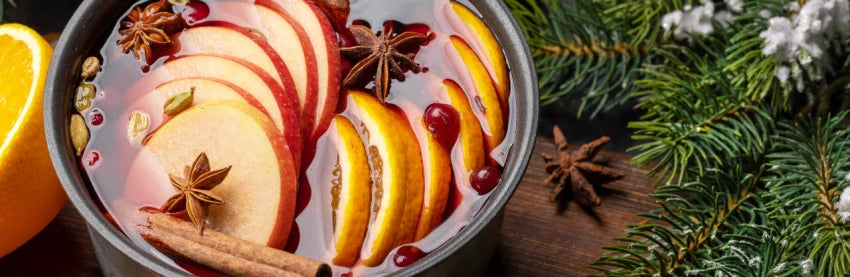
Red mulled wine is the epitome of winter cosiness. With red wine, spices, and a little rum, you can conjure up a drink that provides comforting warmth and is a must-have on any winter evening.
Ingredients for 6 glasses:
- 1 litre red wine
- 50 millilitres rum
- 10 cloves
- 2 cinnamon sticks
- 60 grams sugar
- 3 organic oranges
Preparation: Combine the red wine with cloves and cinnamon sticks in a pot and heat slowly. Squeeze two of the oranges and add the juice. Slice the third orange and also add it to the pot. After about ten minutes of simmering, add rum and sugar and stir well. Let the mulled wine simmer for a few more minutes before serving hot. For a fruity note, you can place an orange slice in the glass or decorate with a zest.

Recipe: Spicy Mulled Wine
If you like strong flavours, go for spicy mulled wine: Cardamom, star anise and allspice ensure intense winter enjoyment.
Ingredients:
- 1 bottle red wine
- 8 cardamom pods
- 10 cloves
- 10 allspice berries
- 1 teaspoon coriander seeds
- 4 star anise
- 3 to 4 orange slices
- 1 cinnamon stick
- 5 tablespoons sugar
Preparation: Briefly toast the spices in a hot pan to release their aromas. Then pour the red wine into a large pot and add the spices, orange slices and sugar. Heat everything slowly, making sure the mulled wine does not boil. Let the mixture steep for at least 30 minutes before straining the mulled wine and serving hot. The result is a robust, spicy mulled wine with a special depth.

Grog: History and Recipe
Grog has its origins in the 17th century on the high seas. Admiral Edward Vernon introduced it to make drinking water last longer. Sailors mixed rum with water, added sugar, and later citrus fruits. Originally , the drink was drunk cold, and only later did the variant with hot water develop. Today, grog is particularly popular in Northern Germany and on the British Isles and is considered a warming counterpart to mulled wine.
Recipe:
- 4 centilitres rum
- 200 millilitres hot water
- Sugar to taste
- Optional: a little lemon juice or lime juice
Preparation: Pour the rum into a heatproof glass and stir in the sugar. Fill the glass with hot water and stir again. If desired, you can refine the grog with a little citrus juice. The result is a simple but intense winter drink that warms body and soul.
Conclusion
Whether mulled wine or grog – both drinks have a long history and bring a piece of cosiness into the glass during winter. With the right recipes, they can be easily prepared at home. Important are the correct temperature, sufficient time to steep, and the selection of high-quality ingredients. Wine, rum, and spices can be found in supermarkets, specialist shops, or dedicated online stores like delicando, which offer a wide selection of spirits and ingredients. Thus, nothing stands in the way of a successful winter evening.
FAQ – Questions and Answers
Which ice cream recipes with alcohol can I find on delicando? +
On delicando, you'll find five creative recipes for ice cream with alcohol – including strawberry prosecco ice cream, creamy Baileys chocolate ice cream, a refreshing mojito sorbet, vodka lemon ice cream, and an invigorating gin and tonic popsicle. All recipes are ideal for hot summer days and invite you to experiment.
How can I make ice cream with alcohol without an ice cream maker? +
Many recipes are designed to work without an ice cream maker. The gin and tonic popsicles or the mojito sorbet can be easily prepared in the freezer – without any special equipment, but with full flavour intensity.
What ingredients do I need for the alcoholic ice cream recipes? +
Ingredients include fresh fruits, cream, yogurt, and spirits like prosecco, gin, Baileys, or vodka. The exact ingredient lists and quantities are provided directly with the recipes.
Are there non-alcoholic alternatives to the featured recipes? +
Yes, some ice cream variations can be easily adapted – for example, by using non-alcoholic sparkling wine or non-alcoholic distillates. This way, the summery taste is preserved, even without alcohol.
Where can I find suitable glasses and accessories for serving ice cream with alcohol? +
Whether elegant dessert glasses, ice cream spoons, or stylish bowls – the delicando shop offers a wide selection of accessories to present your ice cream creations tastefully.