Vegan Lifestyle and Alcohol – Is it Possible? We Show You How to Identify Vegan Spirits
Isn't Alcohol Vegan Anyway?
While it's relatively easy to identify animal-free foods, the situation is a bit different with beverages – especially alcohol. At first glance, it might seem like alcohol is vegan.
After all, beer is mainly made from grain and wine from grapes, which are vegan products, right? Unfortunately, it's not always true that alcohol is vegan-friendly.
One reason is that certain types of alcohol contain an obviously animal product, such as cow's milk in a White Russian cocktail or eggs in Advocaat or honey in mead. The second reason why alcohol may not be vegan is the process by which the alcohol is made. Wine, for example, is not always vegan, due to a process called fining or clarification.
Shortly after wine is produced, it is not yet a completely clear liquid. Instead, young wine may appear hazy. However, most consumers prefer their wine to be crystal clear.
Although hazy wine is in no way inferior and eventually clarifies itself, manufacturers are interested in accelerating the clarification process. To filter these hazy molecules in young wines, winemakers use fining agents. These agents are added to the liquid, and the larger molecules are attracted to these substances. This makes it easier to remove the haziness. Unfortunately, many of these fining agents are not vegan.
The good news for vegans, however, is that this does not mean they have to fundamentally forgo vegan drinks. The trend towards vegan-friendly alcohol reflects the rapid growth of consumers embracing a plant-based and meat-free lifestyle. Vegan alcohol and vegan spirits are therefore increasingly finding their way into our online shop assortment and our supermarkets.
The following explains why alcohol is not always vegan, what alternatives exist, and how to unequivocally identify vegan alcoholic products.

Why Wine and Beer Aren't Always Vegan
Although many of us think of wine as a drink made exclusively from fermented grapes, many wines actually contain products of animal origin. For example, many manufacturers use a variety of animal products as fining agents to remove particles or haze, or to manipulate colors or odors.
Albumen (from egg whites), gelatin (from animal or fish bones and connective tissue), casein (from milk), and isinglass (derived from fish bladders) are among the animal products commonly used in winemaking for clarification and filtration. Lactose (from milk), charcoal (from animal bones), and carmine (crushed beetle scales) are also sometimes used.
Winemakers of white and rosé wines frequently resort to fining agents to remove particles, as consumers often consider clear and bright colors desirable when choosing a beverage. Red wines often contain egg white and milk-based proteins to remove bitter flavors.
Some manufacturers even use oxblood, although this is now generally considered an antiquated technique.
For fortified wines such as Ports and Sherries, similar production processes apply as for wine. Port wine also uses gelatin during the clarification process.
In addition to the use of isinglass in production, red wine also contains E120.
The red dye E120 is derived from the pregnant body of the cochineal insect (Dactylopius Coccus). Campari and some soft drinks also use the cochineal insect for red coloring.
Animal ingredients have also been used for centuries for the fining process of beer, except in Germany, where beer has been vegan-friendly since the 16th century, thanks to the German Purity Law (Reinheitsgebot), which prescribes the use of natural clarification processes and ingredients in brewing.
However, a large number of foreign breweries use isinglass for the clarification of almost all cask beers. If cloudy particles appear in a glass of beer or in a beer mixed drink when held against the light, it is a sure sign that it was brewed in a cask and most likely contains isinglass.
Some beers and wines contain animal ingredients such as the flavor enhancer castoreum (from the castor sacs of male beavers) and the less ambiguously sounding honey. Produced by bees, honey is particularly popular in some traditional ales and fermented wines. This dates back to Viking times when mead was a popular drink made from honey and spices.
Occasionally, the additive glyceryl monostearate is used instead of 900 dimethylpolysiloxane as an anti-foaming agent in the production of beers produced in casks. Sometimes glyceryl monostearate is derived from animals.
Most major cider brands are clarified in a similar way but use gelatin instead of isinglass, which is why cider is mostly not vegan-friendly.
Most Malt Whiskys, Blended Whiskys and Spanish Brandys are stored in barrels that previously contained Sherry, which in turn may have been treated with animal fining agents.
Some imported Vodkas may have been passed through a bone char filter.
Vegan Spirits
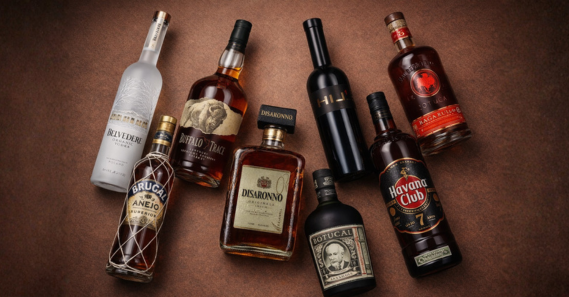
Spirits are largely vegan, meaning the most popular and commonly used spirit brands are suitable for vegans. However, there can be some anomalies, such as some imported vodkas filtered with charred animal bones as part of the sugar refining process, but these are more the exception than the norm.
Cream-based liqueurs are often quite easy to identify; brands like Baileys and Advocaat are known to contain dairy products. In our range, however, you can even find specifically organic vegan liqueurs and cream liqueurs. Milk, cream, and even eggs can also be found in cocktails, but in these cases, the ingredients are quite self-explanatory on the bar menus. A Bloody Mary cocktail, for example, is not vegan-friendly because Worcestershire sauce contains anchovies.

Vegan Beer
Vegans can rest assured that most German beers are produced without animal products. The reason for this is the German Reinheitsgebot (Purity Law), which stipulates that only water, hops, malt, and yeast may be used for brewing beer. Yeast is considered vegan as it is a species of a single-celled organism belonging to the kingdom of fungi.
However, caution is advised with imported foreign beer varieties, as the German Reinheitsgebot does not apply to them. Caution is also advised with so-called "special beers," which deviate from the Reinheitsgebot and allow certain substances, such as spices, to be added to the beers.
Thankfully, beer brewers are following the German example or turning to plant-based alternatives for filtering and clarifying their beers. Common vegan fining agents include Irish moss, pea protein, and bentonite, which is made from clay.
Vegan Wine
With the increasing rise of vegan lifestyles and the heightened desire for organic and biodynamic wines, winemakers around the world are taking note and pursuing a more natural approach. When wines are allowed to develop naturally, they usually refine themselves, reducing the need to introduce animal products into the process. For wines that do not clarify themselves, winemakers have alternative fining agents available, including clay-based methods.
Vegan wine is exactly the same as "normal wine". It is made in the same way, with the same grapes - the only difference is the fining process.
Vegan-produced wine is either natural wine that has not been fined, or it has been clarified with natural substances like clay instead of animal substances. There are a number of different fining agents that can be used which are vegan and much more natural.
The most common are:
- Bentonite clay
- Activated charcoal
- Silica gel
- Pea gelatin

Allowing wine to clarify naturally takes longer and relies on gravity to settle the sediment at the bottom of the barrels, so that the clear wine can be carefully removed and bottled.
The wine must mature in barrels for several years before it is clear enough to be bottled without filtration. This approach can mean that the wine is not as clear as when fining agents are used; although one could argue that this is the wine in its truest state, as nothing has been added.
Even if it is not common for winemakers to list the fining agents used in production on their wine labels, one can clearly identify a wine where no fining agent has been used at all (and which is therefore vegan).
The term "Unfined/Unfiltered" is sometimes used on bottles to show that the wine was made without the use of fining agents, so look out for that if you're searching for a vegan-friendly wine.
How to be Sure Your Alcohol is Vegan
Generally, it can be difficult to tell if an alcoholic beverage is vegan just by looking at the label. When in doubt, you should always check with the manufacturer, as they will clearly state on their website if their products are vegan.
A vegan seal on the bottle is also helpful. The V-Label of the "European Vegetarian Union", for example, not only indicates that a product is vegan, but also that no animal ingredients were used during the manufacturing process.
Fortunately, there are already numerous international platforms where you can check if an alcoholic beverage is vegan.
This includes Barnivore, arguably the most comprehensive and up-to-date platform where vegans can easily and quickly check which alcoholic beverages are actually vegan. Currently, the list of alcoholic beverages listed on Barnivore includes over 50,000 products!
FAQ – Vegan Lifestyle & Alcohol
Is alcohol inherently vegan? +
No, alcohol is not automatically vegan. While many beverages like beer or wine are originally made from plant-based raw materials, animal products are often used in the manufacturing process – for example, during clarification or as an additive in cocktails.
Why are wine and beer often not vegan? +
Many wines and some beers are clarified with animal fining agents such as gelatin, egg white, casein, or isinglass. These substances help to remove cloudiness, but they make the final product no longer vegan – even if they are no longer present in the beverage later.
Which alcoholic beverages are generally considered vegan? +
Pure spirits like gin, rum, whisky, or tequila are vegan in most cases because they are distilled. Exceptions include cream or egg liqueurs and individual imported products that have been filtered through bone char, for example.
How can you be sure that alcohol is vegan? +
The most reliable indicators are vegan labels such as the V-Label or notices like “unfined” or “unfiltered”. Additionally, it’s worth checking manufacturer information or specialized platforms like Barnivore, which systematically list vegan alcoholic beverages.
Where can you find a good selection of vegan spirits and wines? +
Those specifically looking for vegan-certified spirits, wines, or liqueurs will find a growing selection of vegan products at delicando – ideal for anyone who wants to combine enjoyment with conscious consumption.