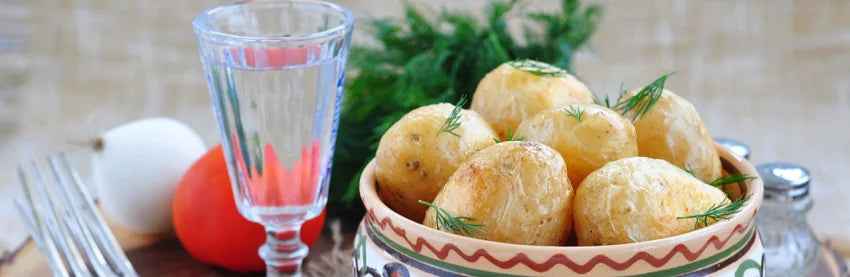
Vodka is no longer made exclusively from classic grains. Distilleries are increasingly relying on unusual raw materials – from potatoes and grapes to tulips and even quinoa. We take a look at the diverse vodka varieties.
How is vodka made?
Before we dive into the various unusual raw materials used in vodka production, let's first take a look at how this spirit is generally made. Only spirits produced according to the traditional method of vodka production may be called vodka. In most cases, grain is the basic ingredient. In the vodka nations of Russia and Poland (you can find more about the differences between the vodkas of both countries here), it is primarily rye, in Finland often barley, and in other parts of the world often wheat. Let's briefly look at the steps of vodka production below.
-
Boiling and Fermentation
The raw material is first boiled in water. The quality of the water used is crucial – the purer, the better. During boiling, the starch is converted into sugar. The resulting sweet liquid is called "wort" and is fermented for three days after adding yeast. This produces the mash. -
Distillation
Since the 19th century, distillation has been carried out in a two-stage process with an analyzer and rectifier, in which the alcohol from the mash is first vaporized and then re-liquefied by condensation, which ensures extremely pure alcohol. -
Filtration
The vodka spirit is then filtered to remove the last aromatic substances and achieve the neutral taste characteristic of vodka. -
Blending and Flavoring (if applicable)
Now, particularly pure water is used again to blend the vodka to drinking strength (usually 40% alcohol by volume). If necessary, the vodka is then flavored. This has a long tradition in Russia and especially Poland; berries, fruits, roots, and spices were used for this purpose. Today, concentrates, essences, and aroma oils are predominantly used when the producer wants to enrich their vodka with certain flavorings. -
Storage
Vodka does not need to mature and can be bottled directly. If the vodka is temporarily stored after production, this is done in tanks.
The Most Unusual Vodka Ingredients
When producing vodka, the goal is often to achieve the most neutral taste possible. The question naturally arises as to how different ingredients affect the taste of vodka. Some are used as a basic ingredient, others in combination with other ingredients or for flavoring. We want to take a closer look at the different ingredients and their effects on taste and present a successful example for each.
Vodka from Potatoes
The potato is probably the least unusual raw material for vodka production on this list. Potato vodka has been drunk since the 19th century, primarily in Poland and Ukraine. Vodka made from potatoes tastes a little more intense and sweeter than more neutral grain vodkas.
Our recommendation for potato vodka comes from the Polish region of Podlasie: The Chopin Potato Vodka has a high starch content of 25%, making it particularly creamy and full-bodied. This vodka is as smooth and graceful on the tongue as a piano sonata by its namesake sounds, and the nose is delighted with aromas of green apples and vanilla. Chopin Potato Vodka is the most awarded potato vodka in the world.

Vodka from Sugar Beets
In our latitudes, the sugar beet, native to Europe, is naturally well-suited for the production of sugar beet vodka. The Berliner Brandstifter use it to bring a particularly delicious variant to the market, but in England, too, they skillfully transform it into a particularly mild vodka that has already conquered London and is gradually gaining ground here: The Ghost Vodka The Gold Skull 40% impresses with a fruity-nutty nose with caramel notes and flows perfectly smooth and warm with subtle aromas of spices, vanilla, and fennel through the throats of its happy tasters. This is how sugar beets become fun!
Vodka from Corn
For corn vodka, you usually have to go to the other side of the big pond, although in Austria, the Entbrannt Mais Wodka 40% produces an excellent corn vodka that fully meets the neutrality requirement of vodkas with its gently clear flavors.
For more corn flavor, however, we want to look at a handmade vodka from Austin, Texas: Tito's Handmade Vodka 40% has won multiple awards, and for good reason: sweet corn aromas meet long-lasting notes of black pepper and provide a varied taste, yet this corn vodka remains light and is therefore also enjoyable neat.

Vodka from Rice
Japan is making ever-increasing waves in the spirits sector and exciting with experiments and innovations. Following the motto "No rice, no prize", the Suntory Yamazaki Distillery has now tried its hand at a rice vodka – and the result is absolutely captivating. If you don't want to travel to Japan, you can simply order the Suntory Haku Vodka Japanese Craft Vodka 40% to your home and let yourself be carried away by the complex sweetness of this vodka, which is distilled 100% from white rice.
Vodka from Quinoa
In keeping with the zeitgeist, there is now even vodka made from the superfood quinoa. This one boasts a nutty and full-bodied quinoa flavor.
As a successful example, we would like to mention Madame Vodka 40% from France. This quinoa vodka, which can of course also be drunk by Monsieur, shines with a rich and harmonious taste as well as fragrance notes of pecans and chestnut blossoms. The quinoa used is organically grown, and the producers donate parts of the profit to environmental protection and reforestation organizations. So you can't go wrong by inviting Madame Vodka into your home.

Vodka with Rhodiola Rosea
Rhodiola rosea (golden root) is called "golden root" in Siberia and is used as an adaptogenic medicinal plant to promote memory, potency, and concentration, which sounds like a sensible combination in conjunction with vodka.
Regardless of whether for these or rather taste reasons – the refinement of Tundra Vodka 40% with extracts of Rhodiola rosea was a complete success, which is also evident from the gold medal at the Prod Expo in 2009. The very pure and mild vodka is perfect for vodka-based long drinks with that certain extra.
Vodka from Truffles
Truffle vodka – that sounds like it's made for connoisseurs, and it is. Périgord truffles, unearthed by specially trained dogs, are a true delicacy and among the most expensive edible fungi in the world. A vodka made from them promises more spice and character than its grain counterparts.
This is also the case with Black Moth Truffle Vodka 40%. It is also distilled five times and filtered three times to obtain a mild vodka with delicious and subtle truffle nuances, which also exudes a unique bouquet, especially for the nose: complex aromas of mushrooms, cream cheese, chamomile, and citrus fruits enchant the sense of smell with complex harmony.

Vodka from Grapes
Hmm, grape vodka – isn't that just an extra-strong wine? Our grape vodka recommendation, Cîroc SNAP FROST Vodka 40%, is indeed produced in Southern France, but that's where the list of "wine-like" qualities ends. This gluten-free vodka, made from specially selected grapes, is distilled five times – so the final product truly has little in common with wine. However, Cîroc SNAP FROST is also for connoisseurs and enthusiasts. Its extremely smooth taste with light and refreshing citrus notes pairs perfectly with French savoir-vivre.
Tulip Vodka
We'd love to meet the person who came up with the idea of making vodka from tulips. The thought of swimming in a sea of vodka flowers sounds quite tempting. And Veld TULPENWODKA 41% is just such a temptation. This vodka, (naturally) produced in the Netherlands from 100% natural tulip bulbs, hits the sweet spot of contemporary taste: gentle and slightly sweet floral notes are accompanied by hints of nuts and earth, but remain subtle enough to qualify as a true vodka.

So, vodka can indeed be made from many unusual raw materials, resulting in very different flavor nuances. Now, we just need to determine which one tastes best. This practically screams for a tasting with like-minded vodka friends. We wish you much enjoyment!