The Bacardi distillery was founded in 1862 by Facundo Bacardí i Massó in Santiago de Cuba. Since its inception, the distillery has been producing rum with a smooth and light flavour. Bacardi’s smooth and light flavour is achieved through sophisticated recipes that vary from one variety to another.
Bacardi Carta Blanca, which is surprisingly mild compared to other white rums, is distilled no fewer than four times to achieve a high level of purity. Furthermore, Carta Blanca is filtered five times through charcoal before being aged for a year in casks. This white rum is thus a symbol of the meticulous production process that lies behind most varieties of Bacardi rum.
In Bacardi’s production process, as is mandatory for rum production, sugar cane forms the basis of the rum. To be precise, Bacardi, like most internationally renowned rum producers, does not produce its rum directly from sugar cane juice, but from molasses. Molasses is a by-product of processing sugar cane into sugar.
Bacardi production facilities
Bacardi operates several production facilities worldwide, with the largest distillery in Puerto Rico playing a central role. This facility is a key production site for Bacardi and makes a significant contribution to the production of the popular rum. In Puerto Rico, not only is Bacardi rum produced in large quantities, but the rum for many international markets is also bottled there.
In addition to Puerto Rico, Bacardi has further production facilities in Mexico and Italy, which complement the brand’s global capacity and ensure that Bacardi can offer its rum in high quality and large quantities worldwide. These sites are crucial to Bacardi’s international expansion and its position as one of the world’s leading rum producers.
Legal dispute over Havana Club – Bacardi vs. Pernod Ricard
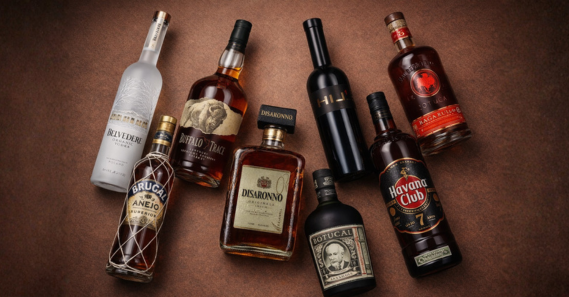
The legal dispute over the ‘Havana Club’ brand between Bacardi and Pernod Ricard is one of the best-known and most protracted conflicts in the spirits industry. In 1994, Bacardi acquired the rights to the Havana Club brand, which had previously been controlled by the Cuban government, leading to legal disputes with Pernod Ricard, which distributed the brand outside Cuba. The dispute centres primarily on the origin and trademark rights of the iconic rum brand, which is regarded both as a symbol of the Cuban rum tradition and as a significant player in the global market.
Despite multiple legal battles and the complexity of the case, the legal dispute over Havana Club remains a significant chapter in the history of the international spirits markets. Bacardi and Pernod Ricard hold differing positions regarding ownership rights, particularly concerning the global distribution and brand identity of Havana Club. This dispute has influenced perceptions of the brand and drawn attention to the legal challenges within international trademark law.
Women at Bacardi – Influence and Significance in the Company’s History
Women have played a significant role in Bacardi’s history and have contributed significantly to the company’s success. Even in the distillery’s early years, Doña Amalia Bacardí, the wife of Facundo Bacardí, was a key supporter of the company and contributed to the development and expansion of the brand. Today, women hold various leadership positions at Bacardi and are committed to innovation, sustainability and the continuous improvement of products and processes.
The importance of women at Bacardi is evident not only in the company’s history but also in its future. By promoting diversity and equality within the organisation, female leaders are encouraged to contribute their ideas and visions. Bacardi thus highlights the vital role of women and emphasises their positive influence on the company’s development and the global spirits industry.
Sustainability at Bacardi – Commitment to the planet and people
Bacardi is actively committed to sustainability and protecting the environment. The company has launched numerous initiatives to reduce its CO2 emissions, minimise water consumption and cut waste. Bacardi uses sustainable materials for its packaging and is working to make its entire production process more resource-efficient. Another important step is the use of renewable energy at its production sites to reduce its environmental footprint.
In addition to its environmental protection work, Bacardi is also committed to social responsibility and focuses on fair working conditions and supporting communities in the regions where it produces.
Bacardi in pop culture – Caribbean flair and a global presence
In popular culture, Bacardi is inextricably linked with Caribbean island flair and is often associated with white sandy beaches, turquoise seas and a relaxed lifestyle. In advertising campaigns, the iconic Bacardi Island is used as a symbol of the exotic Caribbean experience, which underscores the spirits brand’s strong brand identity.
Through numerous mentions in music, films and TV series, Bacardi has established a global presence and is now seen not only as a synonym for high-quality rum, but also for a lifestyle full of adventure and freedom.