The EU Spirits Regulation governs the sweetening of spirits. We explain which provisions apply and what changed with the 2019 regulation.
What is the EU Spirits Regulation?
Regulation (EC) No 110/2008 (Spirits Regulation) from 2008, as well as the newer and revised Regulation (EU) 2019/787 from 2019, define the production, composition, and labeling of spirits within the EU internal market. Protected geographical indications are also defined.
The objective of the regulation is to create market transparency, ensure fair competition, and promote consumer protection.
Spirits are categorized into 44 groups in the current regulation. Stricter rules regarding their production apply to categories 1–14 (which include, among others, rum, whisky, grappa, and fruit brandy). These rules also regulate whether and how much sugar may be added, which is the focus of this article.
Which spirits are sweetened and which are not?
Sugar is essential in the production of spirits, as it is converted into alcohol. However, consumers are often unaware that many spirits and other alcoholic beverages also have sugar added retrospectively (as "finishing sugar"). Therefore, we will first examine which sweetening products (calculated as sugar) may be added to which spirits, and in what quantities, according to EU law.
- Vodka: 8 g per liter
- Whisky: No added sugar allowed
- Gin: For London Gin and Dry Gin, only 0.1 g of sweetening products per liter are allowed; there are no provisions in the regulation for other types of gin.
- Brandy: 35 g per liter
- Fruit brandy: 18 g per liter
- Grappa: 20 g per liter
- Liqueur: Here it's the other way around; a liqueur must have a minimum content of sweetening products – for cherry liqueur and sour cherry liqueur, it's 70 g per liter; for liqueurs flavored exclusively with gentian or similar plants, as well as vermouth, it's 80 g per liter; and for all other liqueurs, it's 100 g per liter.
So, now we know how much sugar may be contained in alcohol and various spirits. Let's return to the EU Spirits Regulation and examine what changed with the updated 2019 version.
What changed with the new EU Spirits Regulation?
One of the most important changes introduced by the new EU Spirits Regulation [Regulation (EU) 2019/787 of the European Parliament and of the Council of 17 April 2019] is indeed the establishment of upper limits for permissible sweetening of many spirits. However, the new upper limits are often still higher than many already applicable in Germany; for example, fruit brandies in Germany are only allowed to have 10g of sugar added per liter, whereas the new EU regulation permits 18g per liter.
Another interesting new feature regarding which alcohol contains sugar is that the name of a spirit may now be supplemented by the term "trocken" or "dry" if it has not been sweetened.
The changes concerning rum and grappa or pomace brandy are particularly interesting, as these were previously often sweetened with large quantities of sugar without the general public being aware. Let's look at the changes in detail.
Sugar additions to Grappa
Grappa, which may only be produced in Italy from pomace or pomace mixed with water and wine lees, often has sugar added, a fact unknown to many consumers. The new EU Spirits Regulation now regulates this:
"Pomace spirit or pomace may be sweetened to round off the final taste of the product. However, the finished product must not contain more than 20 grams of sweetening products per litre, expressed as invert sugar."
However, the addition of sucrose sugar approved by Italian authorities was already limited to 2% beforehand.
The addition of sugar to rum is a common method used by rum producers to make the final product taste sweeter, milder, and rounder. Moreover, older rums are often associated with these characteristics, creating the impression that they are older and therefore of higher quality. Sometimes the rum's sugar content is so high that it should actually be called a liqueur. Another problem is that some producers conceal this sugar addition, and many consumers are unaware that they are drinking sugared rum.
In the new EU Spirits Regulation, the sweetening of rum is regulated as follows:
"Rum may be sweetened to round off the final taste of the product. However, the finished product must not contain more than 20 grams of sweetening products per litre, expressed as invert sugar."
The addition of sugar is now officially permitted in the EU, but it is limited to 20g per liter.
In the following, we will look at some examples of rum types that are enriched with sugar, but also present bottlings that completely forgo the addition of sugar.

Rum varieties with added sugar
A large number of very well-known rum producers enrich their rums with sugar, which is quite controversially discussed. Some blenders openly admit to this process and even see advantages in it, for example, Alexandre Gabriel of the brand Plantation, who sees it as a centuries-old proven practice. He believes that the choice of the right proportions in blending separates the wheat from the chaff in terms of rum quality. Similar processes are, after all, also used in the "dosage" process in the production of Champagne.
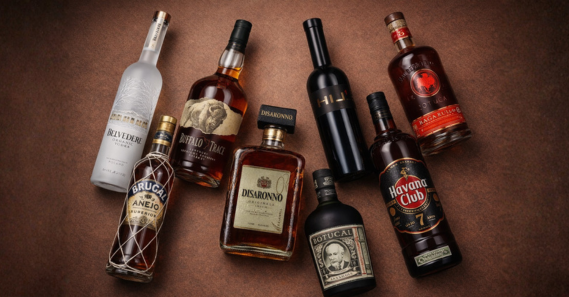
The rum producer Don Papa also states that they add a little natural cane sugar, which is permissible under EU law and is part of the Philippine rum tradition. And at Ron Botucal, they openly provide information about the post-sweetening with cane sugar molasses.
Other rum producers who sweeten many of their rums after distillation include A.H. Riise, Zacapa, and Diplomatico.
Rum varieties without added sugar
However, there are also rum producers who refrain from adding sugar and view this practice critically. Richard Seale, the Master Blender of the Foursquare Distillery and at R.L. Seale in Barbados, finds the current situation too intransparent and laments a blurring of the lines between "sweet" and "dry" rum. It is all the more important to highlight examples of unsweetened rum. Here are some particularly successful examples.
Dictador 12 Years Old Ultra Premium Reserve
The 12-year-old Dictador Ultra Premium Reserve from Colombia, aged in American oak barrels, is a highly esteemed rum among connoisseurs, distilled from honey-like sugar cane syrup. And thanks to aromas of caramel, cocoa, and honey, which combine in a complex and elegant way with oak and coffee notes, one would never think that this rum needed to be sweetened – a natural rum for every occasion.
Silver Seal Old Navy Rum Edition 2018
The Silver Seal brand also refrains from adding extra sweetness to their rum blends. And with this Old-Style-Rum, featuring blends from Demerara, Barbados, and Jamaica, this is by no means missed. Full-bodied aromas of caramel, combined with those of coconut, spices, citrus fruits, and chocolate, complete an absolutely high-quality drop and sweeten your day even without added sugar – quality you can taste.
Mezan XO Jamaica Rum
The Mezan XO Jamaica Rum proves that unsweetened, high-quality rum can also be available at an affordable price. This literally awarded (Gold Medal at the San Francisco World Spirits Competition 2015) rum from Jamaica, with influences of tropical fruits and oak, still tastes pleasantly sweet. Overall, it is a harmonious and balanced rum for any occasion.
Further examples of great unsweetened rums are:
• Mount Gay 1703 XO Triple Cask Blend
• Compagnie des Indes West Indies 8 Years Old Blended Rum
• Hunter Laing Kill Devil Guyana 16 Years Old Single Cask Rum 2003
• Doorly's 12 Years Old Fine Old Barbados Rum
Hopefully, this article has brought some clarity regarding the new EU Spirits Regulation. However, the topic of alcohol and sugar is much more comprehensive; other interesting questions would be, for example, "Is there alcohol without sugar?" or "How much sugar does wine have?". Therefore, keep an eye on our blog in the future and look out for exciting topics, delicious recipes, and tips and recommendations on everything the world of wine and spirits has to offer.